


This is where visibility equals credibility equals trust becomes important. People are far more likely to engage with brands they repeatedly encounter on websites they already know and trust. That is why marketers do not rely solely on their own websites to attract customers — they actively look for opportunities to reach relevant audiences across the web.
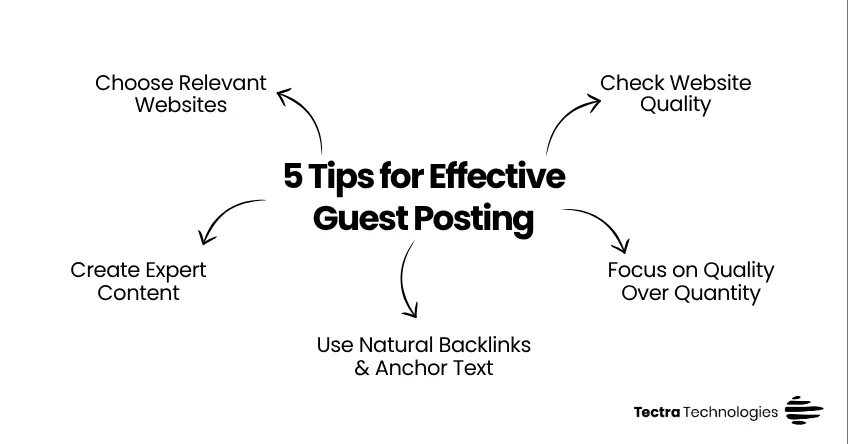
Guest posting is one of the most effective ways to do that. By publishing valuable content on established industry blogs and websites, businesses can expand their reach, build authority, earn quality backlinks, and stay in front of potential customers throughout their buying journey. In this guide, we will look at how guest posting works, why it remains an important SEO strategy, and how marketers can use it for sustainable growth.
Guest posting is the process of writing and publishing content on another website within your industry or niche. In exchange for providing valuable content, the author typically receives a backlink to their website, either within the content or in the author bio section.
For example, a digital marketing agency might contribute an article to a marketing blog. The article provides useful insights for readers, while the agency earns a relevant backlink that supports its SEO efforts.
Unlike spammy link-building tactics, guest posting focuses on creating quality content for real audiences. That is what makes it a legitimate and widely accepted SEO strategy when it is executed in line with search engine guidelines.
Earn high-quality backlinks. Backlinks remain one of Google's strongest ranking signals. When reputable websites link to your content, search engines view your site as more trustworthy and authoritative. Guest posting lets you earn contextual backlinks from relevant websites, which usually carry far more value than low-quality or unrelated links.
Build topical authority. Search engines increasingly evaluate how knowledgeable a website is within a specific subject area. Publishing guest posts on industry-related websites reinforces your expertise, and over time those relevant mentions and backlinks strengthen your site's topical authority alongside consistent content marketing.
Increase referral traffic. Guest posts generate targeted traffic from readers who are genuinely interested in your products, services, or content. Unlike paid traffic, visitors arriving through relevant industry publications tend to engage more and convert better, because they already have an interest in your niche.
Expand brand visibility. Guest posting introduces your brand to audiences that may never have discovered you through search engines alone. Appearing on respected industry websites increases awareness, credibility, and trust among potential customers and business partners.
Support long-term SEO growth. Unlike paid advertising, the benefit of a guest post can continue for years. A published article may keep attracting readers, referral traffic, and SEO value long after it goes live, which makes guest posting a long-term investment in organic visibility rather than a one-off spend.
Not every website is worth targeting, though. The quality of the publishing site has a direct effect on the value of the placement, so weigh relevance to your industry first, then consistent organic traffic, the depth of recently published articles, whether readers actually engage through comments and shares, and whether the publisher maintains clear editorial guidelines. Published standards usually signal a site worth appearing on. If you would rather not do that vetting in-house, guest post services exist precisely to map relevant publishers and handle the outreach.

Author
SEO Executive, Tectra Technologies
Mithun Nivas is an SEO Executive at Tectra Technologies, specialising in technical SEO, content strategy, and organic growth for SaaS and service businesses.
He works on keyword research, on-page optimisation, and technical SEO to help clients improve search visibility and drive qualified organic traffic.
Latest Blogs
What Is GEO (Generative Engine Optimization)? A Complete Guide
What is GEO? Learn how generative engine optimization differs from SEO and how authority, entity building and content formats help you appear in AI answers.
Read article →
How to Rank in Google AI Overviews: A Practical Guide
Learn how to rank in Google AI Overviews with direct answers, topical authority, real expertise, quality backlinks and entity recognition. A practical 2026 guide.
Read article →
What Is a Niche Edit Backlink? A Complete Guide
What is a niche edit backlink? Learn how curated contextual links in existing content work, why SEOs use them, common mistakes and how they compare to guest posts.
Read article →